Job-specific English
English for Bartenders
Bar English is a name, a pour, and one clarifying question before the next guest leans in — plus a clean way to close a tab when the room is loud.
The job
What is a bartender?
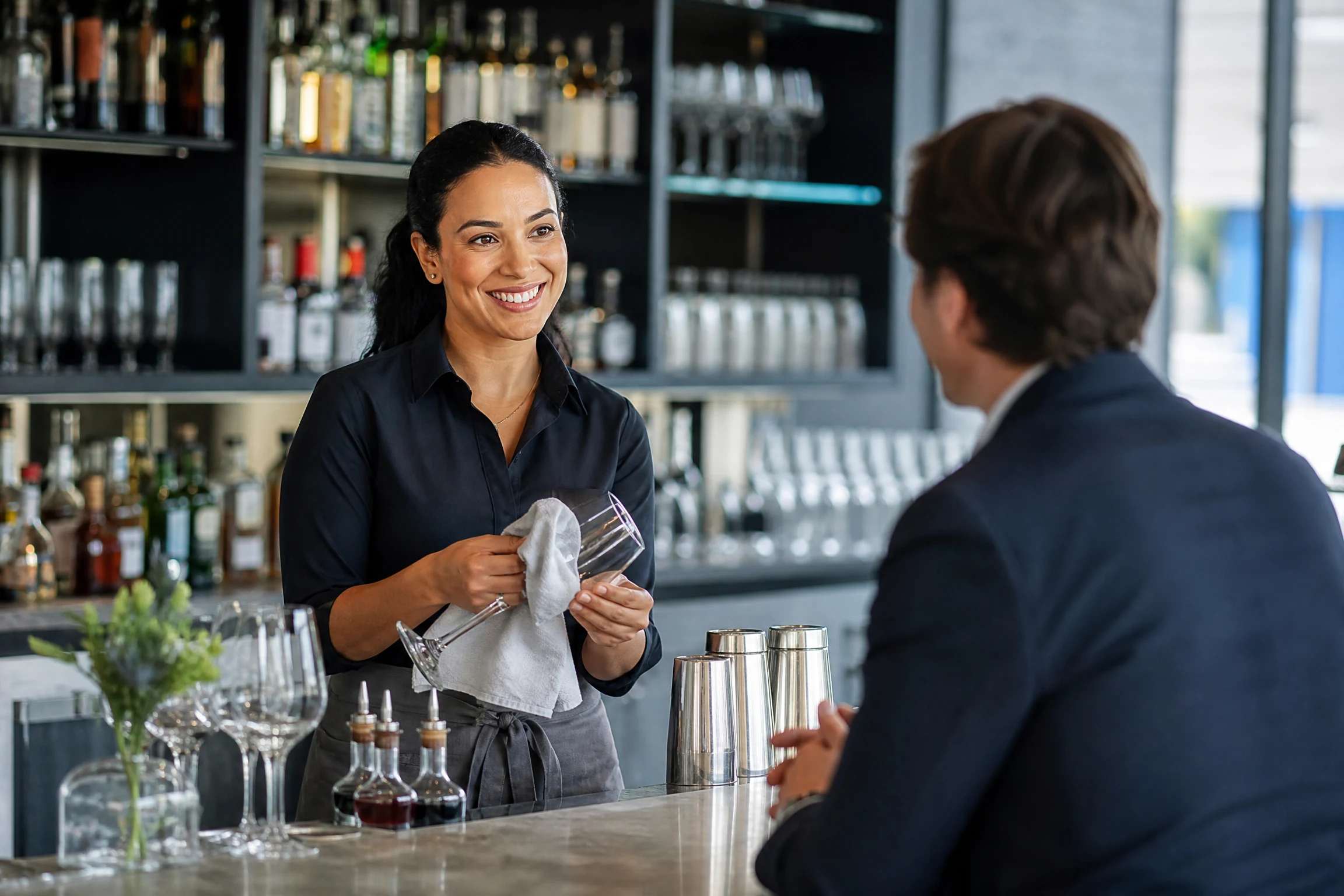
A bartender greets guests at a bar, takes drink orders, mixes or pours what was asked, keeps a tab, takes payment, and keeps the station stocked without guessing a modifier.
People search for English for bartenders, bartender English vocabulary, bar English phrases, English for bar workers, and bartender interview English. This page is bar-station language: beer, wine, cocktails, glassware, and a closing tab. It is not the Server / Waiter overview (tables, courses, and a dining-room ticket). It is not Fast Food Worker (a counter combo). It is not Cashier as a grocery till.
US official data is Bartenders (SOC 35-3011) on the BLS Occupational Outlook Handbook. Canada uses Bartenders (NOC 64301). The UK National Careers Service profile is Bar person. Those titles overlap. Alcohol-service certificates and age rules vary by country, state, province, and venue. This page does not treat one licence as a global hire rule.
What happens between the rail and the tab
The loop is greet, hear the drink, confirm the modifier, make or pour it, ring it, and keep the well from going dry.
BLS describes bartenders mixing and serving drinks to guests directly or through waitstaff. In a restaurant that means a server’s ticket and a guest at the rail at the same time. In a stand-alone bar it is mostly face-to-face. Banquet and hotel bars add a function sheet and a last-call time.
Some venues also ask bartenders to run food, cut fruit, or close the till. Those extras are house-specific. This page does not treat every cocktail program as a universal rule, and it does not recommend brands or products.
What a bartender usually handles
Accuracy on the drink matters more than speed that guesses the garnish.
Take the order
Repeat the drink, the size, and any “no ice” or “up” request. If two people talk at once, take one order, then the next.
Ask one clarifying question
“Rocks or up?” “Lite or the IPA?” “With or without the foam?” One question beats a remake.
Build or pour what was said
If the ticket and the guest disagree, stop and ask. Do not invent a house default the guest never heard.
Keep the tab honest
Open, add, split, or close. Say the last four of a card only if that is house policy. Never guess a table number.
Work with servers
A rail ticket is a drink, a modifier, and a table. Read it back if the handwriting is messy. The dining room is their job. The well is yours.
Close cleanly
Last call, glass counts, and a stock note for the next shift. “We’re out of lime” is a close-out fact, not a complaint.
Typical tasks on a bar shift
These are the spoken beats between the first pour and the last wipe.
A beer and a wine at once
Confirm both. Pour the beer last if the foam will die. Say which glass is whose if two guests look the same from behind.
A cocktail substitution
If you are out of an ingredient, name the swap and wait for a yes. Do not silently change a recipe.
A server’s ticket during a rush
Read table and modifiers first. “Table 12, two Negronis, one no orange” is the whole message.
A tab that will not close
Say what failed: declined, split, or missing seat. Get a manager if the guest is waiting and you cannot fix it.
A complaint about a drink
Ask what is wrong — too sweet, too strong, wrong spirit. Remake or get a lead. Do not argue about taste.
Stock and garnish
Call a 86 before the rail is empty. “86 lime, 86 IPA” is a sentence a manager can act on.
Glassware and ice
Name the glass if a coworker is running the dishwasher. A martini in a pint is a remake you caused.
Shift hand-off
Leave three facts: what is 86, what cash is in the till, and any open tabs that still need a name.
Where bartenders work
The work is on-site in restaurants, hotels, taverns, clubs, banquet rooms, and other licensed rooms. Hours often include nights and weekends.
BLS places bartenders in food and drink service. Canada’s NOC 64301 names restaurants, hotels, bars, taverns, clubs, and banquet halls. The UK Bar person page also names pubs, hotels, and social clubs. Noise, standing, and a wet floor are normal. A quiet hotel lobby bar and a Saturday night well are the same job title with different English speed.
This is not table service and not a drive-thru. If a posting says barback, that is usually support: ice, stock, and glass. If it says mixologist, the house may expect more recipe talk. Learn this venue’s list. Do not import another bar’s slang as if it were a national language.
Tools and the words around them
The POS brand changes. The need to repeat a modifier does not.
POS and tabs
Open check, add seat, split, void, comp. If you do not know the button, say so before you guess a discount.
Jigger, shaker, strainer
Short tool names during a rush. “Shaker’s dirty” is enough for a barback.
Glassware
Pint, wine, flute, rocks, coupe, highball. Name the glass if the dishwasher is stacking the wrong one.
Garnish and ice
Twist, wheel, olive, dirty, extra ice, no ice. Those words change the drink.
Well and back bar
House pour versus a call brand. If you do not carry it, say so and offer what you do have.
Radio or a manager
A short report: declined card, a spill, or a guest you cannot serve. Facts, not a speech.
Bartender English you actually use
You need drink names, modifiers, and one polite sentence that stops a wrong pour.
Drink families
Beer, wine, spirit, cocktail, mocktail, soda. Guests rarely say the menu’s official name. Learn both.
Modifiers
Up, rocks, neat, dirty, dry, tall, extra lime, no foam. Repeat the ones that change the build.
Tab language
Start a tab, close it out, split two ways, add 18. Those verbs keep money from landing on the wrong seat.
86 and stock
Out, low, last case. A lead can reorder from three words.
Server tickets
Table number, quantity, modifier. Read back if the ticket is wet or rushed.
A calm “say that again”
Noise is part of the job. Asking once is faster than a remake.
Conversations at the rail
These are the interruptions that decide whether the drink matches and the tab closes.
Two guests talking over each other
Point or nod to one person. “You first — what can I get you?” Then the next. Silent guessing starts a fight.
“Make it like last time”
Ask what last time was if you were not there. A name and a modifier beat a smile and a wrong pour.
A server needs drinks now
Repeat the table. If you are mid-shake, say “two minutes, table 9.” Do not nod and forget.
A card declines
Say it quietly. Offer another card or cash. Get a manager if the guest is stuck.
Someone is cut off
House policy varies. Use the words your manager trained. Do not invent a legal lecture at the rail.
A spill or broken glass
Warn, stop the walkway, and call for a pan. “Glass on the rail” is the first sentence.
Where bartender English is hard
The difficulty is names and modifiers in noise, not essays.
Brand versus house names
Guests say a brand. The well has a house pour. Ask “is the house okay, or do you want that brand?”
Numbers in a loud room
Two and ten, fifteen and fifty. Repeat the count while pointing at the glasses.
Wine and beer lists
By the glass versus the bottle. Ask “glass or bottle?” before you open anything.
Accent and music
Lean in and repeat. “Was that a gin sour or a whiskey sour?” is a professional question.
Ticket shorthand
Each venue writes modifiers differently. Learn this POS. Do not import another bar’s codes.
Legal words
ID, last call, and who you can serve change by place. Learn the house script. Do not invent the law.
Bartender interview English
Managers listen for whether you will repeat an order, stay calm in a rush, and ask instead of guessing a pour.
A remake you handled
One short story: the drink, what was wrong, and how you fixed it. That is the professional answer.
Working with servers
Say you read the ticket, you call 86, and you do not hold a table’s drinks without saying why.
Nights and weekends
Say the shifts you can actually work. A bar that needs Friday nights will ask.
Licensing and training
Name only the certificates you hold. Rules vary. Do not claim a licence you do not have.
English and noise
It is fine to say you repeat modifiers out loud. Accuracy is the point.
Market context
Bartender job-market snapshot
US figures are Bartenders (SOC 35-3011) — not waiter pay. Canada’s figures are Bartenders (NOC 64301). The UK National Careers Service profile is Bar person. Alcohol-service certificates vary by jurisdiction, so no single licence is listed as a universal requirement. No UK pay figure is shown because this page does not treat listing-card ranges as a sourced wage series.
- $33,530Median annual wage for bartenders
SOC 35-3011 is bartenders, not waiters. Local pay and tip policy vary by venue.
- $16.12 / hourMedian hourly wage for bartenders
- 756,700Employment of bartenders
- 6% growthProjected employment change for bartenders
BLS projects about 44,800 additional bartender jobs. It is not a forecast for every bar.
- C$20.00 / hourMedian national wage for bartenders (NOC 64301)
- 172 advertised jobsJob Bank advertised openings snapshot for NOC 64301
Job Bank advertised jobs — snapshot retrieved 2026-09-09. This is not a permanent employment total.
Free Stage 1
Start Bartender English Stage 1
Stage 1 is free on this website: listening, vocabulary, grammar, sprint, and quiz for drink orders, tabs, substitutions, and guest communication. Later stages stay in the Speak2Work iPhone app and are not published here.
Listening
Hear interviewer and candidate turns from a bartender hiring screen.
Vocabulary
Learn words for drink orders, pours, tabs, and guest service.
Grammar
Fill the gaps in short sentences about orders, substitutions, and busy shifts.
Sprint
Build answers from listening phrases for bartender interview English.
Quiz
Answer multiple-choice questions about Bartender Stage 1 English.
Related English on Speak2Work
English for Servers and Waiters
Tables, courses, and kitchen tickets — a dining room, not the well.
English for Fast Food Workers
Counter combos and a window, not a cocktail ticket.
English for Cashiers
Retail tenders without building a drink.
Bartender interview English
Practice answers about rushes, remakes, and availability.
Workplace English
Short coworker phrases you reuse in a noisy room.
English Guides
Short guides for work talk and interviews.
Questions about bartender English
What English does a bartender need?
You need drink names, modifiers, tab verbs, and a short way to say you are out of something. You also need one sentence that confirms an order before you shake or pour.
How do bartenders confirm drink orders?
Repeat the drink and the modifier: “Two IPAs and a gin and tonic, no ice.” If the room is loud, point at the guest as you say it. Ask one question if two words could mean two builds.
Is bartender English the same as server English?
No. Server English is tables, courses, and a longer check-back. Bartender English is the well, the rail, and a tab. They meet on a drink ticket. Speak2Work keeps those as separate paths.
Do I need an alcohol-service certificate?
Not universally. Some places train you on the job. Some states, provinces, and venues require a named course. Ask the employer. This page does not treat one licence as a global rule.
How can I prepare for a bartender interview in English?
Practise repeating a three-item order, saying the nights you can work, and telling one remake story. Name only the certificates and POS systems you have actually used.
Are there free bartender lessons on this website?
Yes. Stage 1 Listening, Vocabulary, Grammar, Sprint, and Quiz are free on this website. Reading and later stages stay in the Speak2Work iPhone app.
Trust
Sources and data notes
Bartender, bar person, mixologist, and barback overlap in ads. Official series names are kept below so a well is not treated as a dining-room waiter job or a grocery till.
Occupational Outlook Handbook: Bartenders
U.S. Bureau of Labor Statistics. Reference period: 2024–2034. Last verified: 2026-09-09.
Bartender wages
Government of Canada Job Bank / Labour Force Survey. Reference period: 2023–2024. Last verified: 2026-09-09.
Bartender market summary
Government of Canada Job Bank. Reference period: Retrieved 2026-09-09. Last verified: 2026-09-09.
Bar person
National Careers Service.
Practice bartender English
Use this overview for drink-order language, then continue rail, tab, and teamwork phrases in the Speak2Work app.