
Job-specific English
English for Farm Workers
Farm English is a row, a count, and one question before you pick or move stock — plus a short warning when a field, animal, or machine is not safe.
The job
What is a farm worker?
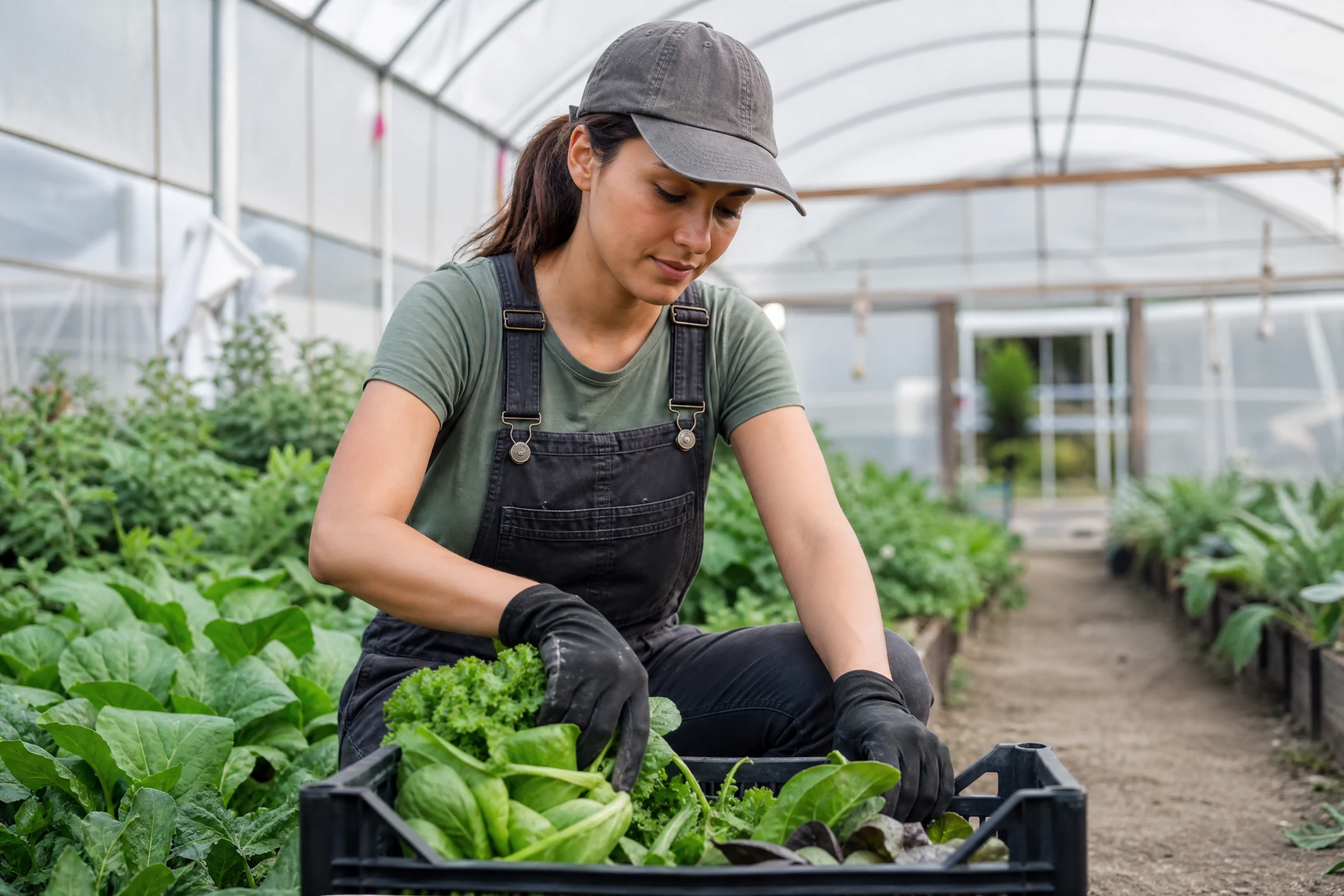
A farm worker plants, tends, harvests, sorts, or packs crops, and may also feed, move, or watch livestock so a farm can finish the day’s work without guessing a row or a count.
People search for English for farm workers, farm English vocabulary, harvest English, English for agricultural workers, and farm job interview English. This page is field and barn language: crops, weather, tools, animals, and a supervisor’s direction. It is not the Landscaper overview (lawns and grounds). It is not Warehouse Worker (an indoor dock). It is not Construction Helper (a building site).
US official data sits under Agricultural workers, a group that includes crop, nursery, greenhouse, and livestock labour. Canada’s closest Job Bank series used here is Harvesting labourers (NOC 85101), which is crop help and not every farm title. The UK National Careers Service profile is Farm worker. Licences, seasonal visas, and pesticide tickets vary by place. This page does not treat one card as a global hire rule.
What happens on a farm shift
The loop is hear the task, find the row or pen, do the work, and report a count, a problem, or a finished block.
BLS describes agricultural workers maintaining crops and tending livestock. On a fruit farm that may mean picking and packing. On a dairy it may mean moving animals and cleaning. The English skill is the same: name the crop or animal, repeat the quantity, and say when something is damaged, sick-looking, or blocked — without diagnosing a plant or animal disease.
You do not invent veterinary or agronomy advice. You can say a plant looks damaged or an animal is not moving normally and that a supervisor should see it. That is workplace caution, not a diagnosis.
What a farm job usually requires
Outdoor stamina, a repeated instruction, and a clear count before you leave a row.
Hear the task
Which field, which crop, which animal, and how many. Repeat it: “This row, ripe only, two bins.”
Weather and hours
Early starts and heat or cold are common. Say the hours and weather you can actually work.
Quality, not speed only
A bruised peach or a missed tag is a problem. Ask what “ready” means on this farm.
Tools you have used
Name them. Do not claim a tractor or a sprayer you have not been shown.
Safety talk
Machines, animals, and chemicals have house rules. This page does not replace farm-specific training.
A count at the end
Bins, crates, or animals moved. Report the number. Silent leftovers become tomorrow’s mystery.
Typical tasks during a farm shift
These are the spoken beats between “start at the gate” and “that row is done.”
A harvest row
Ripe only, or everything. Ask once. Picking the wrong fruit wastes a bin.
Sorting and packing
Size, damage, and which crate. Hold one example if the words are new.
Water, feed, or move stock
Which pen, how many, which gate. Repeat the count out loud.
A blocked path or broken tool
Name it and stop if it is unsafe. Do not invent a repair you were not asked to make.
Weather changes the plan
Rain, heat, or frost can move the crew. Ask the new field. Do not keep a plan that was cancelled.
A coworker needs a crate
Name the size. Do not take a labelled stack that is already counted.
End-of-day cleanup
Tools in, gates shut, water off if that is the rule. Ask what “closed” means here.
A visitor or inspector
Send them to the supervisor. Do not give farm policy you do not own.
Where farm workers work
Work is outdoors or in barns, greenhouses, packing sheds, and fields. Seasonal weeks and early starts are common.
The environment is physical and weather-facing. Dust, mud, animals, and machines are part of many farms. Follow this farm’s PPE and chemical rules. This page does not publish a pesticide or livestock-safety manual.
This is not landscaping. A posting that says farm worker, harvest hand, or agricultural worker is a crop or livestock operation, not a municipal lawn. Canada’s NOC 85101 is harvest labour, not every barn job. Read the duties. Do not treat every outdoor ad as a farm.
Field tools and the words around them
Brand names change. The need to name the task does not.
Knives, shears, and bins
Sharp tools and a count. “This crate is full” is a complete update.
Hose, irrigation, and valves
Which line and whether it is on. Do not open a valve you were not shown.
Gates and pens
Which animals and which direction. A wrong gate is a safety problem.
Tractors and implements
Only if you are trained. “I have not driven this machine” is a complete sentence.
PPE
Gloves, boots, hat, hearing or dust protection if the farm requires it. Ask in training.
Radio or group chat
Short status: field, row, problem. Learn this farm’s words. Do not invent a code.
Farm English: rows, counts, and a clear stop
You need crop and animal names you can confirm and a way to slow one second without guessing.
Repeat the instruction
Field, row, quantity, quality. Four facts. Then start.
Weather talk
Heat, rain, frost, wind. Ask whether the plan changed. Do not stay in a cancelled field.
Quality checks
“Is this ripe enough?” Hold the fruit. Guessing a grade fills a reject bin.
Animal caution
Stay with workplace words. This page does not teach veterinary English.
A count you can defend
Bins in, animals moved, rows finished. Numbers beat “almost done.”
Closing the shift
Tools, gates, and what is left. Then ask what tomorrow starts with if they tell you.
Conversations in the field
These are the moments that decide whether the crew stays safe and the count is honest.
A crop that does not match the sample
Show one piece. “These are smaller than the sample. Keep picking or stop?”
An animal that looks unwell
Do not diagnose. Name what you see and get a supervisor.
A machine you have not used
Say so. Ask for a walkthrough. Do not “try it” on a running implement.
A language mix-up on a row
Point at the start and the end. “This row to that post.”
Heat or fatigue
Ask for water or a short pause if the farm allows it. Silent collapse helps no one.
End of day
Report leftover bins and open gates. Do not leave a count for someone else to invent.
Where farm English is hard
The difficulty is short, specific words in wind — not long essays.
Crop and animal names
Point at the plant or the pen. Do not invent a variety you cannot spell.
Ripe, ready, damaged
Farms mix these words. Confirm the grade before you fill a crate.
Numbers for counts and times
Fifteen and fifty. Thirteen and thirty. Repeat the bin count while looking at the stack.
Left, right, north row
Use a landmark: “the row by the irrigation pipe.”
Visa or seasonal talk in interviews
Rules vary. Say what status you actually have. Do not invent a work-permit rule.
Chemical words
Stay with house names after training. This page does not teach pesticide English.
Farm worker interview English
Supervisors listen for outdoor hours you can work, tasks you have actually done, and whether you ask before you guess.
Work you have done
Name harvest, packing, livestock, or greenhouse work you have actually done.
A time you asked before acting
The instruction, what was unclear, and what you asked. That is the professional answer.
Physical work and weather
Say the shifts and weather you can work. Do not promise a licence you do not hold.
Tools and machines
Name them. Do not claim a tractor you have not been shown.
English on a noisy field
It is fine to say you repeat counts out loud. Accuracy is the point.
Market context
Farm worker job-market snapshot
US figures are the BLS Agricultural workers group. Canada’s figures are Harvesting labourers (NOC 85101), a crop-help series that is not every farm title. The UK National Careers Service profile is Farm worker. Seasonal visas and tickets vary. No UK pay figure is shown because this page does not treat listing-card ranges as a sourced wage series.
- $35,980Median annual wage for agricultural workers
BLS Agricultural workers is a group: crop, nursery, greenhouse, livestock, and related farm labour. It is not one crop and not a landscaper series.
- $17.30 / hourMedian hourly wage for agricultural workers
- 812,600Employment of agricultural workers
- 3% declineProjected employment change for agricultural workers
BLS projects about 22,500 fewer jobs in the group. Openings still occur because people leave the occupation.
- 116,200Projected average annual openings for agricultural workers
BLS says these openings come from replacement, not from group growth.
- C$18.00 / hourMedian national wage for harvesting labourers (NOC 85101)
NOC 85101 is harvesting labourers and related crop help. It is not the whole farm, not livestock-only, and not landscaping.
Free Stage 1
Start Farm Worker English Stage 1
Stage 1 is free on this website: listening, vocabulary, grammar, sprint, and quiz for fields, harvest, livestock, tools, and weather. Later stages stay in the Speak2Work iPhone app and are not published here.
Listening
Hear interviewer and candidate turns from a farm-worker hiring screen.
Vocabulary
Learn words for fields, harvest, livestock, tools, and weather.
Grammar
Fill the gaps in short sentences about crops, tasks, and farm instructions.
Sprint
Build answers from listening phrases for farm-worker interview English.
Quiz
Answer multiple-choice questions about Farm Worker Stage 1 English.
Related English on Speak2Work
English for Landscapers
Lawns and grounds — outdoor work with a different vocabulary.
English for Warehouse Workers
Indoor locations and outbound cartons — not a field.
English for Construction Helpers
A building site and a tape measure — not a harvest row.
Farm interview English
Practice answers about outdoor hours, counts, and asking before you guess.
Workplace English
Short status updates you reuse with a lead.
English Guides
Short guides for work talk and interviews.
Questions about farm worker English
What English do I need on a farm?
You need crop or animal names, a count, a location, and a short way to repeat a supervisor’s instruction. You also need one sentence that reports damage, weather, or a blocked path.
Is farm worker English the same as landscaper English?
No. Landscaper English is lawns, beds, and a customer property. Farm English is crops, harvest, or livestock on an agricultural operation. Speak2Work keeps those as separate paths.
Do I need a licence to work as a farm worker?
Not universally. Some roles need a driver’s licence, a pesticide ticket, or a seasonal work permit. Some farms train on the job. Ask the employer and the local rule. This page does not treat one card as a global requirement.
Can I give advice about sick animals or plant disease?
No. This page is workplace English. If something looks wrong, you can stop, describe what you see, and get a supervisor. That is not a diagnosis.
How can I prepare for a farm worker interview in English?
Practise naming the outdoor work you have done, the weather and hours you can work, and one story about asking before you picked or moved the wrong thing.
Are there free farm worker lessons on this website?
Yes. Stage 1 Listening, Vocabulary, Grammar, Sprint, and Quiz are free on this website. Reading and later stages stay in the Speak2Work iPhone app.
Trust
Sources and data notes
Farm worker, harvest hand, and agricultural worker overlap in ads. Official series names are kept below so field labour is not treated as landscaping or warehouse work.
Occupational Outlook Handbook: Agricultural Workers
U.S. Bureau of Labor Statistics. Reference period: 2024–2034. Last verified: 2026-09-11.
Harvest hand wages
Government of Canada Job Bank / Employment Insurance Survey Data. Reference period: 2023–2024. Last verified: 2026-09-11.
Farm worker
National Careers Service.
Practice farm worker English
Use this overview for field and harvest language, then continue farm phrases in the Speak2Work app.