
Job-specific English
English for Landscapers
Landscaping English is short and outdoor. You hear a task, name the tool, and confirm the property — often over the sound of a mower.
The job
What is a landscaper or groundskeeper?
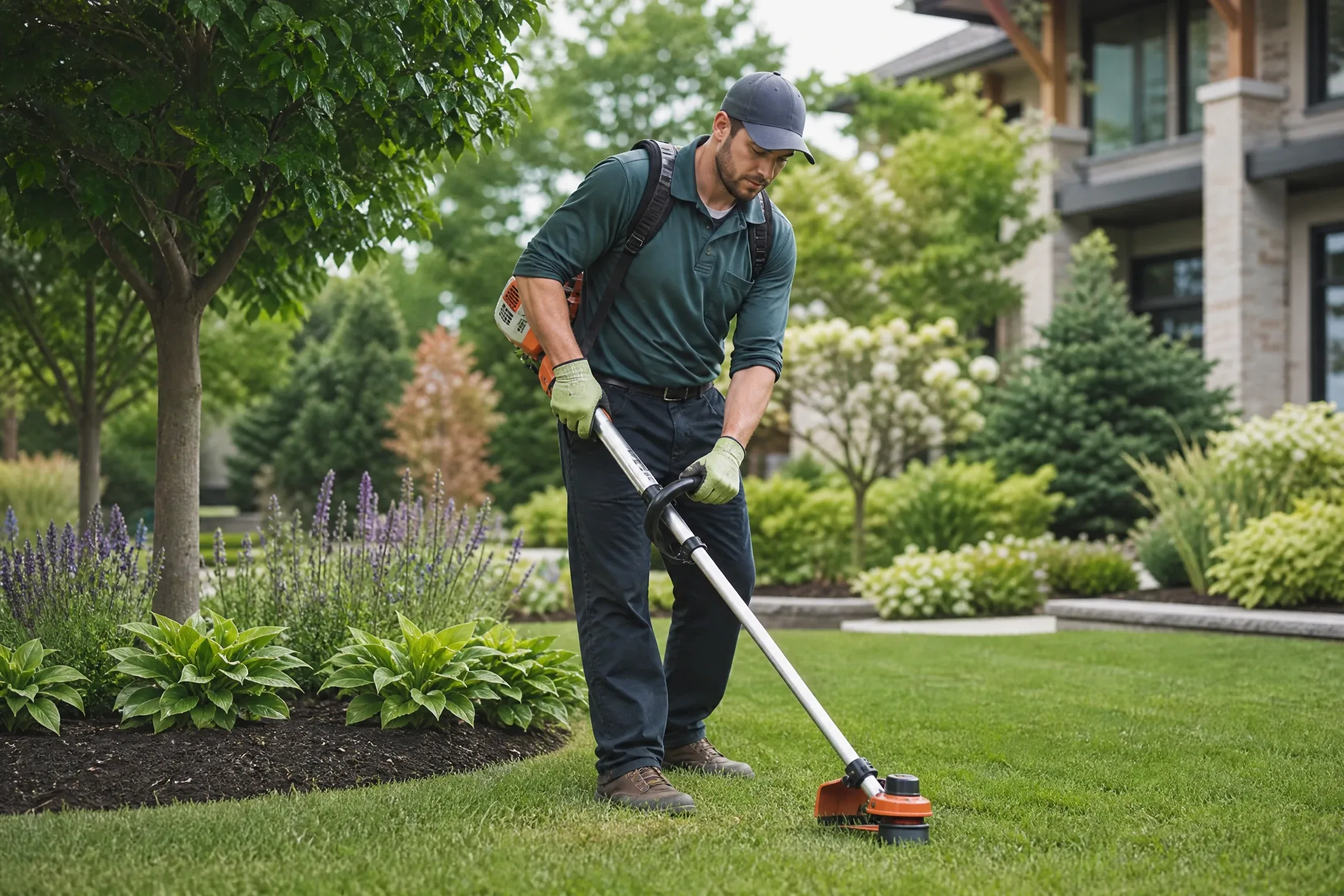
A landscaper or groundskeeper maintains outdoor property: lawns, beds, trees and shrubs, paths, and cleanup. Some crews also build simple hardscape. The work is physical, usually outdoors, and often seasonal.
People search for English for landscapers, grounds maintenance English, landscaping vocabulary, and English for outdoor workers. This page covers that language for crew and grounds work. It is not a landscape-architecture degree guide.
US statistics often sit under Grounds Maintenance Workers, with a closer series called Landscaping and groundskeeping workers. Canada’s labourer series is Landscaping and grounds maintenance labourers. The UK National Careers Service has a Landscaper profile that can include garden construction. Those are related, not identical, and the numbers below are labeled.
What does a landscaper do?
You follow a property list. Mow this lawn. Trim that hedge. Blow off the walk. Leave the flower bed alone. The English skill is hearing the exception — the one plant you must not cut — while the rest of the crew is already moving.
Crews work from a supervisor’s instructions and from what they see on site: wet grass, a low branch over a sidewalk, a sprinkler head in the path of the mower. You report damage instead of hiding it. You ask when a task is unclear. Guessing with a trimmer is expensive.
Some work is seasonal. BLS notes that grounds maintenance can be busier in spring, summer, and fall, and that some workers do other services in winter, such as snow removal. That is occupational context, not a guarantee of year-round hours.
Typical responsibilities
A lawn-care crew, a municipal grounds team, and a garden-construction crew do not do identical work. These are common.
Follow the spec
Cut height, which beds to weed, which trees to leave. Confirm before you start if the instruction was shouted over a trailer.
Use equipment safely
Guards on, eye and ear protection, watch for people and glass. Safety talk is English too: “Hold on, kids in the yard.”
Leave the property clean
Blow walks, haul debris, close gates. Customers notice the last ten minutes as much as the mowing.
Report problems
Broken irrigation, a dead plant, a low wire. Tell the lead. Do not wait until the truck has left.
Customer or property talk
A short status is enough: what you finished, what you will do next, and whether the water was on.
Seasonal tasks
Planting in spring, watering in heat, leaf cleanup in fall, snow work in some winter jobs. Ask which season this employer actually covers.
Typical tasks on a property
These are the verbs you will hear on a crew.
Mow
Set the height, overlap your passes, and avoid the beds. Confirm if clippings stay or get bagged.
Trim and edge
String trimmer along fences and trees. Edger along the sidewalk. Watch sprinkler heads.
Planting
Right plant, right hole, right spacing. Repeat the plant name if it is new.
Mulch and beds
Weed first if that is the spec. Keep mulch off the trunks.
Cleanup
Rake, blow, load the trailer. Do not leave clippings on the street if the house rule forbids it.
Irrigation
You may be asked to notice a leak or a head that does not pop up. Report it; do not redesign the system unless that is your job.
Hedges and shrubs
Confirm the shape. “Take a little off the top” is not a measurement — ask how far.
Load-out
Tools back on the truck, fuel caps on, gates closed. The English is a checklist, not a story.
Typical work environment
The work is outdoors, in heat, rain, and cold. It is physically demanding. Crews move from property to property. This is not remote work.
Noise from mowers and blowers is the listening problem. A supervisor’s instruction may be one sentence long. If you did not hear the exception, walk closer and ask. “Do we cut the front hedge today?” is a better question than cutting it and being wrong.
BLS notes that grounds maintenance work can be repetitive and that workers who use mowers and similar equipment need protective clothing and eyewear. Safety English is part of the job: stop, look, name the hazard.
Equipment and workflows
Learn the names your crew uses. The same tool has more than one English name.
Mowers
Walk-behind or rider. Ask about height and whether to bag. “Deck” and “discharge” show up in instructions.
Trimmers and edgers
String trimmer, weed eater, whipper-snipper — same family of tool, different regions. Use the word your lead uses.
Blowers and rakes
Cleanup is its own task. Confirm where debris should go: trailer, curb, or compost pile.
Hand tools
Shovel, spade, rake, pruners, wheelbarrow. Point and name until the words stick.
Trailers and trucks
Load so tools do not fly. The English is “strap that,” “gate’s up,” “we’re short a blower.”
PPE
Glasses, ear protection, gloves, boots. If someone says “glasses on,” that is an instruction, not a suggestion.
English for landscapers
Outdoor English is instruction English: where, how much, and what not to touch.
Task instructions
“Start in the back. Leave the rose bed. Blow the driveway last.” Repeat the exception: leave the rose bed.
Left, right, front, back
Use the house as the reference: “front left from the street.” Point. Do not assume your left is their left.
Equipment names
Ask “which trimmer?” if there are two. Bring the one they meant, not the one that was closer.
Safety talk
“Hold up — car’s backing out.” Interrupt the work. Safety sentences can be short.
Weather and schedule
Rain can move a mowing day. Hear the new time. Confirm whether you still meet at the yard.
Crew English
“I’ve got the back.” “Need fuel.” “This head is broken.” Status first, then extra detail.
Customer English
If a homeowner asks how long you will be, give a range: “About twenty more minutes on this side.” Do not promise a design change unless you are the lead.
Measurements
Heights, bag counts, and plant spacing. If you do not know inches versus centimeters on that crew, ask once.
Common English situations
These are the talks that happen between the truck and the last blow-off.
The morning list
Addresses and a note for each stop. If two houses are on the same street, repeat the number out loud.
A plant you must not cut
Stop. Ask the lead to point. Do not “just take a little off” if the instruction was leave it.
Broken equipment
Name the tool and the problem: “Trimmer won’t start” or “mower deck is hitting.” Then wait for the next instruction.
A homeowner at the door
Smile, say you are with the crew, and get the lead if they want a change. Do not renegotiate the job yourself unless that is your role.
Heat and water
Crews call breaks. Hear the time you are expected back. “Five minutes” still needs a clock.
End of day
What is left for tomorrow, what is empty, what is damaged. Three facts. Then you can go.
English challenges for ESL outdoor workers
Classroom vocabulary lists do not include a mower running next to the instruction. These are practical difficulties, not comments about any nationality.
Noise
Shut down or walk away from the machine to ask. “Say again — back lawn or front?” is normal.
Short instructions
Leads drop words. If you only heard “hedge,” ask which hedge.
Regional tool names
Weed eater, whipper-snipper, strimmer. Learn the crew’s word in the first week.
Negatives
“Don’t edge today” is easy to miss. Repeat the negative: “No edging. Got it.”
Left and right on a property
Agree on “from the street.” Point before you cut.
Numbers in addresses
Thirteen and thirty, fifteen and fifty. Repeat the house number.
Safety words under noise
Stop, hold on, look out, kids, dog, glass. If you hear one, stop first, then ask.
Written lists
A paper route list still needs the same care as speech. If a note is messy, ask before the truck rolls.
Interview English for landscapers
Employers want to know you can work outside, follow a spec, and name the equipment you have used.
Experience
List tools and tasks, not a life story: mowing, trimming, planting, cleanup. Say if it was residential, commercial, or both.
Physical work
Say you can work a full outdoor day. Mention heat and rain only as facts you already know, not as complaints.
A time you followed instructions
Tell a short story about leaving a plant or a bed alone because the lead said so.
Seasonal hours
Ask what the winter looks like. Say your availability. Do not assume year-round work.
English on the crew
You can say you ask people to repeat instructions when the mower is running. That is safer than guessing.
Market context
Landscaper job-market snapshot
US numbers come from BLS grounds-maintenance data, with a closer series for landscaping and groundskeeping workers. Canada’s figure is a labourer NOC. UK pay is National Careers Service guidance for landscapers, which can include garden construction. Seasonal hours vary and are not guaranteed.
- $38,470Median annual wage for grounds maintenance workers
This is the BLS grounds-maintenance group. It includes landscaping and groundskeeping workers plus tree trimmers, pesticide handlers, and related roles.
- $18.31 / hourMedian hourly wage for landscaping and groundskeeping workers
Narrower series (SOC 37-3011) inside the grounds-maintenance group — closer to this Speak2Work profession.
- 1,192,500Employment of landscaping and groundskeeping workers
- 4% growthProjected employment change for landscaping and groundskeeping workers
BLS calls this about as fast as average. The wider grounds-maintenance group is also projected at 4%.
- 171,600Projected average annual openings for grounds maintenance workers
Openings figure is for the whole grounds-maintenance group, not landscaping-only.
- C$20.75 / hourMedian national wage for landscaping and grounds maintenance labourers (NOC 85121)
This is a labourer series, not landscape designer or horticulture technician.
- 423 advertised jobsJob Bank advertised openings snapshot for NOC 85121
Job-posting counts change quickly. This is a snapshot, not a permanent employment total.
- £26,000 to £38,000National Careers Service salary guidance for landscapers
UK “landscaper” on NCS often includes garden construction and planting, which can sit above a seasonal grounds-labourer wage. Gardener and groundsperson are related but not identical.
Free Stage 1
Start Landscaper English Stage 1
Stage 1 is free on this website: listening, vocabulary, grammar, sprint, and quiz for landscaping and groundskeeping English. Later stages stay in the Speak2Work iPhone app and are not published here.
Listening
Hear interviewer and candidate turns from a landscaper phone screening.
Vocabulary
Learn words for lawns, tools, PPE, and outdoor cleanup.
Grammar
Fill the gaps in short sentences about experience, tools, safety, and availability.
Sprint
Build answers from listening phrases for landscaping interview English.
Quiz
Answer multiple-choice questions about Landscaper Stage 1 English.
Related English on Speak2Work
English for Cleaners
Indoor workplace cleaning English — a different job if a site also has a janitorial crew.
English for Construction Helpers
Building-site labour — a different outdoor crew.
English for Painters
Walls and finish coats, not grounds work.
English for Handymen
Small indoor repairs some properties also hire.
English for Jobs
Browse farm worker and other outdoor paths on the Jobs hub.
Landscaper interview English
Practice answers about equipment, outdoor work, and following a spec.
Workplace English
Learn English for coworkers, customers, and daily tasks.
English Guides
Read practical guides for work and interviews.
Questions about landscaper English
What vocabulary does a landscaper need?
You need task verbs (mow, trim, edge, plant, mulch, blow off), place words (front, back, bed, hedge), and equipment names. You also need safety words you can hear over a machine.
Is a landscaper the same as a groundskeeper?
The work overlaps. Groundskeepers often maintain one site, such as a campus or park. Landscapers may move between properties or build gardens. Speak2Work covers both under this path. Official statistics still split the titles.
What English do outdoor crews use with a supervisor?
Short status: what is done, what is blocked, what is broken. Repeat any “don’t cut that” instruction before you start the tool.
Is landscaping seasonal?
Often yes. BLS notes busier planting, mowing, and trimming in spring, summer, and fall, and that some workers do other services in winter, such as snow removal. Ask the employer. Do not assume year-round hours.
How can I prepare for a landscaper interview in English?
Name the tools you have used, say you can work outdoors, and tell one story about following a spec. Practice repeating a house number and a “leave that bed” instruction.
Does Speak2Work publish free web lessons for landscapers?
Yes. Stage 1 Listening, Vocabulary, Grammar, Sprint, and Quiz are free on this website. Reading and later stages stay in the Speak2Work iPhone app.
Trust
Sources and data notes
Each figure is tied to a named occupation, geography, and reference period. Landscaper, groundskeeper, gardener, and landscape labourer are related titles, not one identical series.
Occupational Outlook Handbook: Grounds Maintenance Workers
U.S. Bureau of Labor Statistics. Reference period: 2024–2034. Last verified: 2026-09-09.
Landscape labourer wages
Government of Canada Job Bank / Employment Insurance Survey Data. Reference period: 2023–2024. Last verified: 2026-09-09.
Landscape labourer market summary
Government of Canada Job Bank. Reference period: Retrieved 2026-09-09. Last verified: 2026-09-09.
Landscaper
National Careers Service. Reference period: Published career-profile guidance, verified 2026-09-09. Last verified: 2026-09-09.
Practice landscaping English
Use this overview to understand the job, then continue listening and speaking practice in the Speak2Work app.